
Rabi Crop Sowing Down by 46 Percent Across India Amid Soil Moisture Deficit
· 1 min read
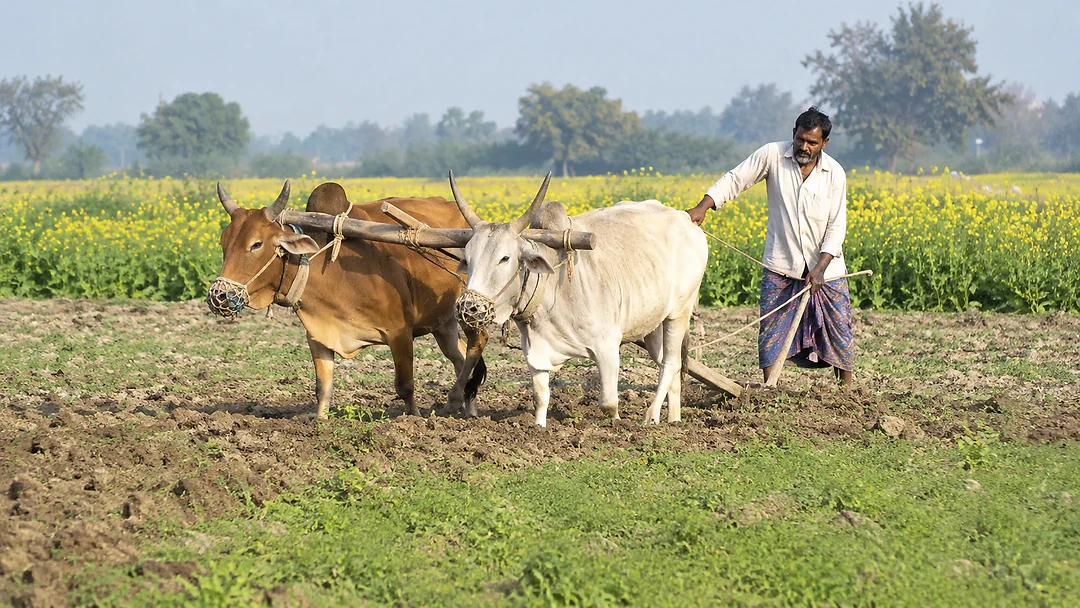
Nationwide Rabi crop sowing coverage fell by 46 percent compared to last year. According to Union Agriculture Ministry data, only 37.56 lakh hectares were sown as of October 30, compared to 69.02 lakh hectares during the same period last year. A 13 percent deficit in rainfall between June and September reduced soil moisture, delaying sowing operations.
New Delhi: Rabi crop sowing has slowed down across the country. At the start of this year's Rabi season, the cultivated area recorded a sharp decline compared to last year. According to data released by the Union Ministry of Agriculture, Rabi crops were sown in only 37.56 lakh hectares across the country as of October 30, 2026. Sowing was recorded in 69.02 lakh hectares during the same period last year, marking a drop of approximately 46 percent.
Agriculture ministry statistics indicate that deficit rainfall and reduced soil moisture are the main reasons for this situation. Rainfall during the southwest monsoon from June to September this year was 13 percent below normal. This reduced the soil moisture required for sowing crops. Additionally, limited water availability through reservoirs and canals in major wheat-growing states posed a challenge for farmers.
Looking at individual crops, wheat sowing lagged significantly. Wheat was sown in only 19 thousand hectares this time, compared to 3.34 lakh hectares as of October 30 last year. Pulse cultivation dropped from 19.56 lakh hectares last year to 9.45 lakh hectares this time. Bengal gram (chana) cultivation also fell from 14.35 lakh hectares to 5.90 lakh hectares.
Oilseed cultivation also saw a decline. Sowing was limited to 20.97 lakh hectares this time, compared to 38.62 lakh hectares last year. Within this, mustard and rapeseed cultivation decreased from 38.07 lakh hectares to 20.50 lakh hectares.
Union Agriculture Minister Shivraj Singh Chouhan conducted a review of the situation. He directed officials to speed up Rabi sowing. He suggested promoting low-water-consuming crops like Bengal gram, mustard, masoor lentil, and millets in areas with low water availability. He also ordered that seeds capable of withstanding climate change and high temperatures be made available to farmers.
The Union Agriculture Ministry stated that adequate stocks of certified seeds along with urea, DAP, MOP, and NPK fertilizers required for the Rabi season are available. It added that it is monitoring supplies in coordination with state governments.
However, these statistics pertain only to the sown area recorded as of October 30. The Rabi sowing season is still ongoing. Therefore, changes in sown acreage are likely in the coming weeks depending on weather conditions and water availability. The currently recorded 46 percent drop pertains only to the crop sown area and does not mean a 46 percent decline in total crop yield.
Written with AI assistance from our reporter’s notes, then checked and published by an editor.
Related stories
India Ranks 176th in Yale Environmental Performance Index 2026
India ranked 176th out of 177 countries with a score of 22.
 thaluri sunilWeatherYemmiganur
Heavy Rains Overflow Streams in Bhadradri Kothagudem, Disrupting Transport
Weather
Cyclone Murasu Hits AP Coast; Heavy Rains in Telangana, Red Alert for 3 Districts
Weather
Heavy Rains Predicted in Andhra Pradesh for Next Three Days, Orange Alert Issued
The IMD has issued an orange alert for coastal Andhra Pradesh as heavy rains and strong winds are expected over the next three days.
Weather
India Wins 27 Medals in Single Day at Asian Para Games, Reaches 5th Position
Indian athletes claimed 27 medals including 5 golds on Wednesday at the Asian Para Games in Japan.
Weather

Karepalli: Sarpanch Tony Promptly Solves Mud Problem at Singareni School
 hatkar RambabuWeatherSingareni
India Ranks 176th in Yale Environmental Performance Index 2026
thaluri sunilWeatherYemmiganur
Heavy Rains Overflow Streams in Bhadradri Kothagudem, Disrupting Transport
Weather
Cyclone Murasu Hits AP Coast; Heavy Rains in Telangana, Red Alert for 3 Districts
Weather
Heavy Rains Predicted in Andhra Pradesh for Next Three Days, Orange Alert Issued
Weather
India Wins 27 Medals in Single Day at Asian Para Games, Reaches 5th Position
Weather

Karepalli: Sarpanch Tony Promptly Solves Mud Problem at Singareni School
hatkar RambabuWeatherSingareni
Latest news
- Tension in Mukkampadu as Man Destroys YSRCP Lunch Event Food; Police Detain Suspect

- Inclusive Education Centre for Persons with Disabilities Inaugurated in Nizamabad

- Standard iPhone 18 Launch Delayed to March 2027, Price May Touch Rs 1 Lakh

- Daily Panchangam Details for Sunday, November 22

- TG SAFE Suspends Licenses of Four Hyderabad Hotels Over Unhygienic Conditions

- Gold Worth Rs 1.37 Crore Seized at Shamshabad Airport

Most read
- 1Rashtriya Hindu Parishad Demands Reopening of Closed Temple in Hanumakonda
- 2Theft at Gauramma Temple in Narsipuram Colony, Property Worth Rs 50,000 Stolen
- 3Devarakonda MLA Balu Naik Urges DGP CV Anand to Set Up New Police Stations
- 4RTI Service Society Honors State Information Commissioner Deshala Bhupal
- 5CM Revanth Reddy Expresses Concern Over Lok Sabha Delimitation Process