
Use of Champak and Ketaki Flowers Banned in Lord Shiva Worship
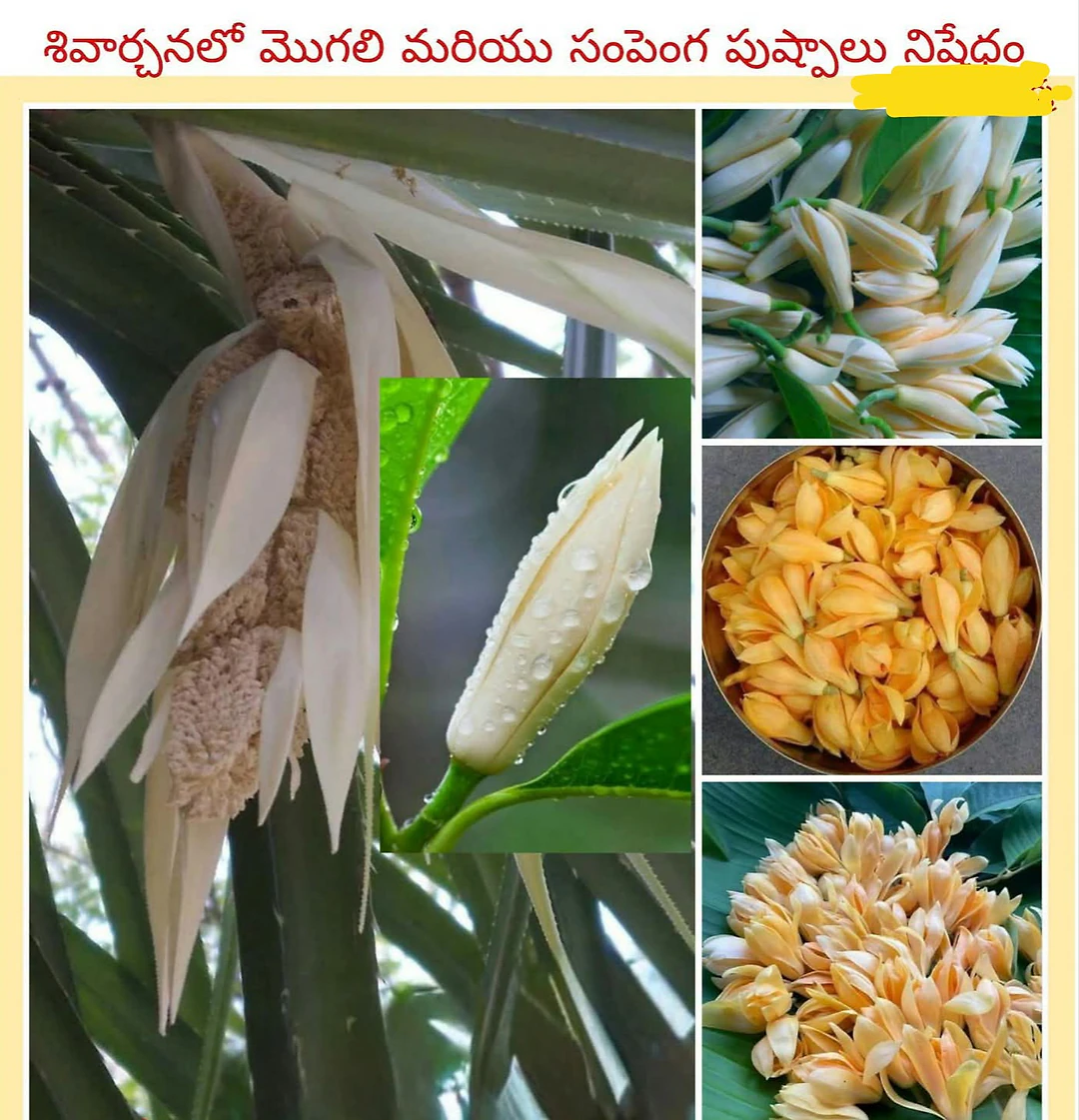
Prohibition of Sampenga (Champak) and Mogali (Ketaki) flowers in Shiva worship.
According to the *Sri Shiva Maha Purana*, there is no flower that is not dear to Lord Shiva. However, leaving aside Champaka and Ketaka, all other flowers can be offered to Him.
As per the *Sri Shiva Rahasya* chapter on prohibited flowers, Shiva worship must be performed by avoiding Ketaki, Champaka, Kunda (a type of jasmine), and Japa (hibiscus) flowers. These must be abstained from at all times during Shiva worship. It is stated by the Lord or Nandeeshwara that whoever offers Champaka and Ketaki flowers to Lord Shankara will receive no fruit from their worship.
*Reason for the Curse* Due to giving false testimony at the time of Lingodbhava, Ketaki and Champaka flowers were cursed to be permanently banned from Lord Shiva's worship on Earth.
*Prohibition of Intensely Fragrant and Intoxicating Flowers* Flowers with an overly strong scent, faded or stale flowers, and Ketaki and Champaka should not be offered to Lord Shiva. The *Skanda Purana* mentions that flowers with excessive scent (Atigandha), unnatural odor (Vigandha), intoxicating fragrance (Madagandha), and those forbidden by the scriptures must be avoided in Shiva worship. Champaka and other flowers that possess an intensely strong fragrance that distracts even yogis must be omitted during Shankara's worship.
Lord Parameshwara is the embodiment of supreme detachment and the attribute-less form (Nirguna). Highly intense fragrances, such as those of Champaka and Ketaki, stimulate the senses and increase Rajasika and Tamasika qualities. Hence, strong aromatic flowers that cause sensory distraction are prohibited for Shiva, who is worshiped by yogis and ascetics.
Additionally, highly fragrant flowers often house insects, bees, and snakes, increasing the likelihood of venomous contact or defilement. Furthermore, overly sweet-scented flowers like Champaka are considered arrows of Manmatha (arousers of desire). Offering desire-arousing flowers to Paramashiva, the destroyer of Manmatha, is contradictory and thus forbidden. Devotees are advised to offer calm-inducing flowers rather than intensely fragrant ones that divert the mind from concentration.
*Regarding Ashta Pushparchana* To represent the eight-fold nature of Lord Shiva—Earth, Water, Fire, Air, Ether, Sun, Moon, and the Yajamana—eight types of flowers are offered. In this context, Champaka is accepted as a representation of the Fire or Earth element.
*Exceptions in Champaka and Ketaki Ban* When offered individually, Champaka and Ketaki flowers must be left out. However, when included as part of a group in Ashta Pushparchana alongside other flowers like Bilva in special worship rituals, there is no flaw or prohibition. The single flower does not dominate among other fragrances during Ashta Pushparchana, so the restriction does not apply in that specific collective context, whereas it remains prohibited when offered exclusively.
ఆధారం: Nittala venkata Veerabhadra subrahmanyam
Written with AI assistance from our reporter’s notes, then checked and published by an editor.
Related stories
Bharatanatyam Performance Captivates Devotees at Simhachalam
A Bharatanatyam performance was held at the Sri Varaha Lakshmi Narasimha Swamy temple in Simhachalam on Saturday evening.
 SVNRajaraoDevotionalGopalapatnam
 📷 2
Warangal: Bhadrakali Temple Radiant During Karthika Deepotsavam
 Srinivas NDevotionalHanamkonda
Karthika Tulasi Pujas Performed in Bheemunipatnam
 విద్యా సాగర్ శ్రీపట్నాలDevotionalBheemunipatnam
Radhakrishna Celebrations at Gokul Park on November 24
Radhakrishna Mahotsavam celebrations will be held grandly at Gokul Park on November 24 under the auspices of the Visakha District Yadava Welfare Association.
 MUNAGAVALASA YASODHA RAJ KUMAR PATNAIKDevotionalMaharanipeta
 📷 2
93rd Vishwa Shanti Maha Yagam Begins in Kodad
 భట్టు సంతోష్ తోళా నాయక్DevotionalKodad

Sabarimala: Robust Medical Arrangements Made for Makaravilakku
Nittala venkata Veerabhadra subrahmanyamDevotionalHyderabad
Bharatanatyam Performance Captivates Devotees at Simhachalam
SVNRajaraoDevotionalGopalapatnam
Warangal: Bhadrakali Temple Radiant During Karthika Deepotsavam
Srinivas NDevotionalHanamkonda
Karthika Tulasi Pujas Performed in Bheemunipatnam
విద్యా సాగర్ శ్రీపట్నాలDevotionalBheemunipatnam
Radhakrishna Celebrations at Gokul Park on November 24
MUNAGAVALASA YASODHA RAJ KUMAR PATNAIKDevotionalMaharanipeta
93rd Vishwa Shanti Maha Yagam Begins in Kodad
భట్టు సంతోష్ తోళా నాయక్DevotionalKodad
Sabarimala: Robust Medical Arrangements Made for Makaravilakku
Nittala venkata Veerabhadra subrahmanyamDevotionalHyderabad
Latest news
- Tension in Mukkampadu as Man Destroys YSRCP Lunch Event Food; Police Detain Suspect

- Inclusive Education Centre for Persons with Disabilities Inaugurated in Nizamabad
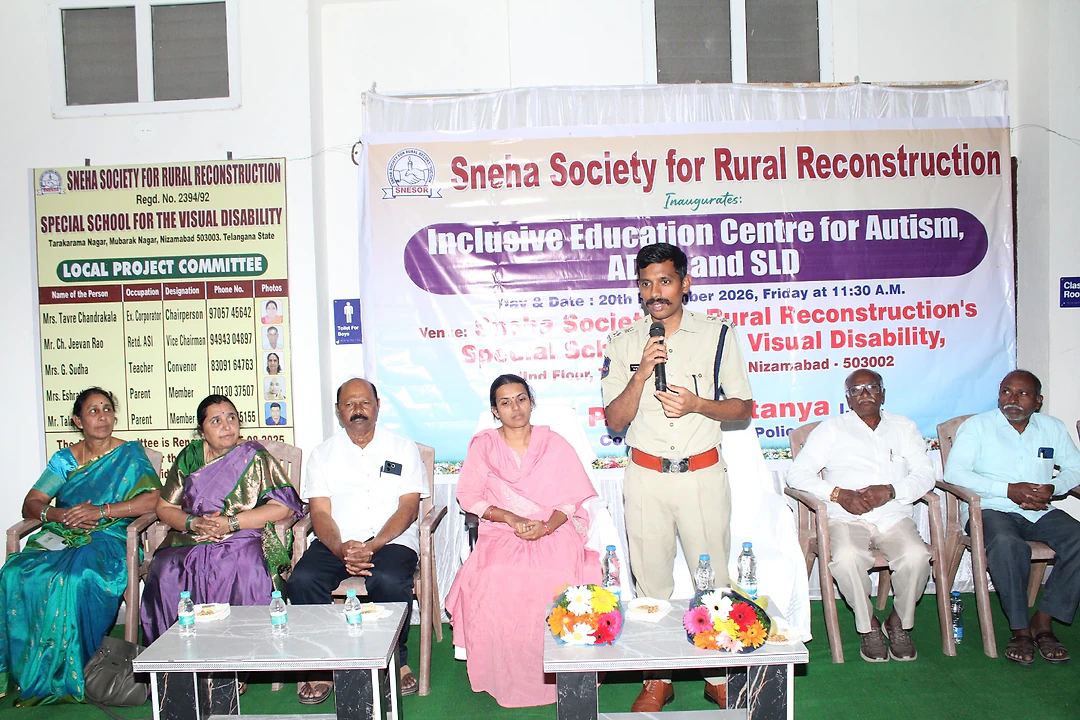
- Standard iPhone 18 Launch Delayed to March 2027, Price May Touch Rs 1 Lakh

- Daily Panchangam Details for Sunday, November 22
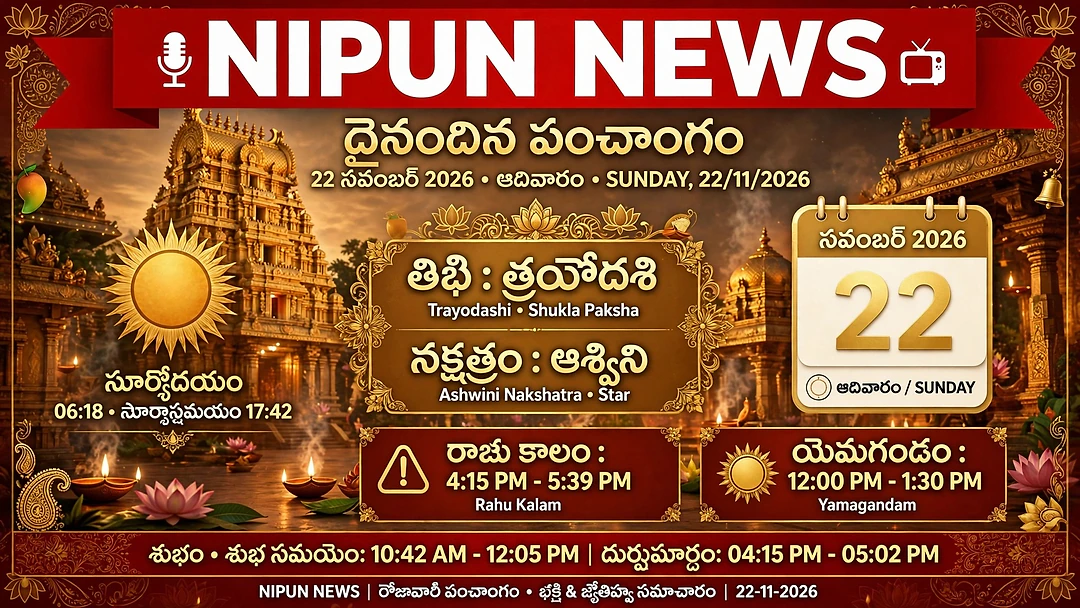
- TG SAFE Suspends Licenses of Four Hyderabad Hotels Over Unhygienic Conditions
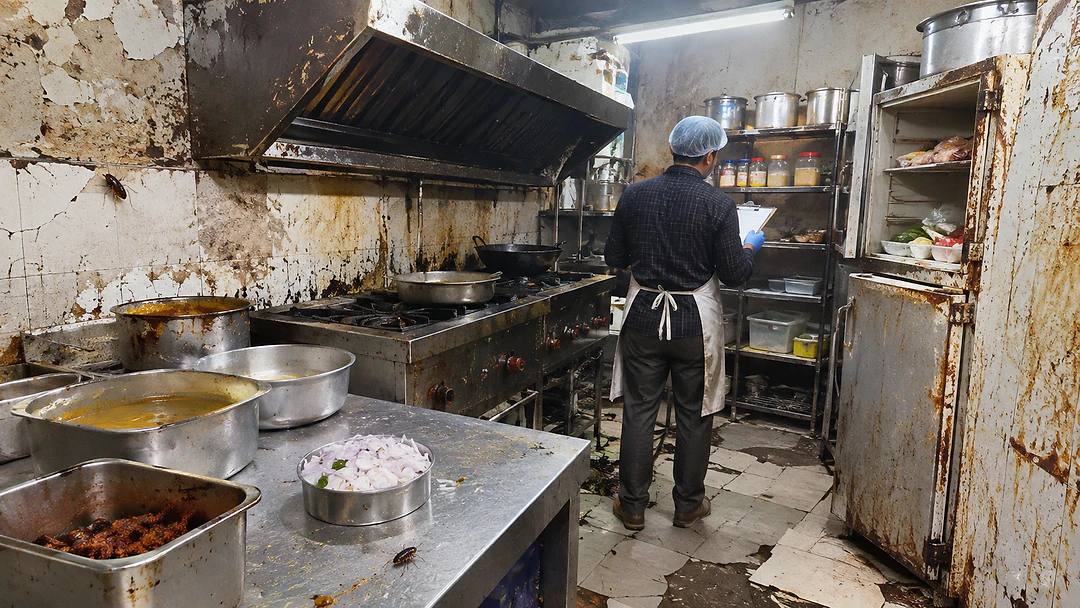
- Gold Worth Rs 1.37 Crore Seized at Shamshabad Airport
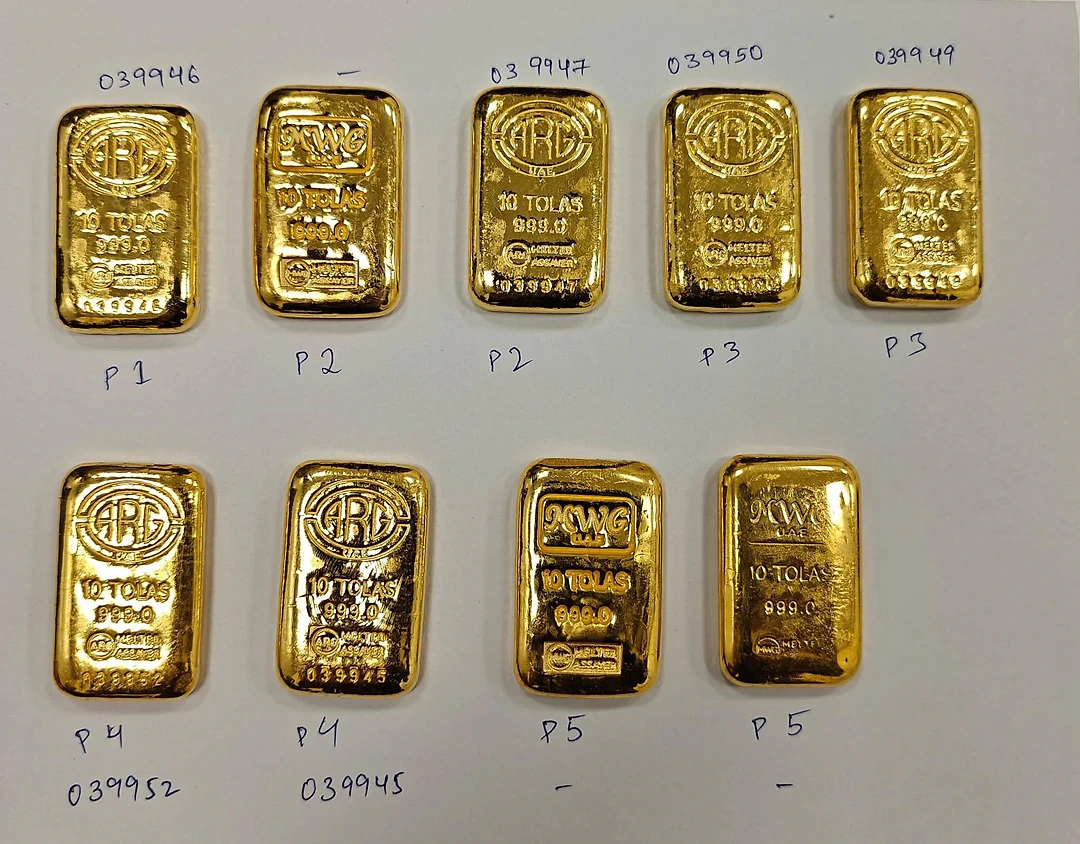
Most read
- 1Rashtriya Hindu Parishad Demands Reopening of Closed Temple in Hanumakonda
- 2Devarakonda MLA Balu Naik Urges DGP CV Anand to Set Up New Police Stations
- 3Theft at Gauramma Temple in Narsipuram Colony, Property Worth Rs 50,000 Stolen
- 4RTI Service Society Honors State Information Commissioner Deshala Bhupal
- 5CM Revanth Reddy Expresses Concern Over Lok Sabha Delimitation Process